



























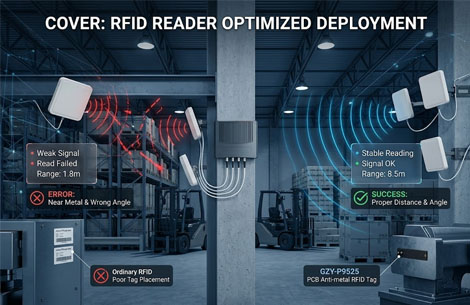
One of the most common problems in RFID deployments is unexpectedly short reading distance.
Many customers test an RFID system in a laboratory environment and achieve excellent performance. However, after deploying the same hardware in a real warehouse, factory, or logistics center, the read range suddenly drops from 10 meters to only 2–4 meters.
In industrial RFID projects, short read range is rarely caused by a single issue. Instead, it is usually the result of multiple RF factors working together.
This article explains the most common reasons why RFID read range becomes short and how to improve RFID reading performance in real industrial environments.
Common RFID Read Range Problems
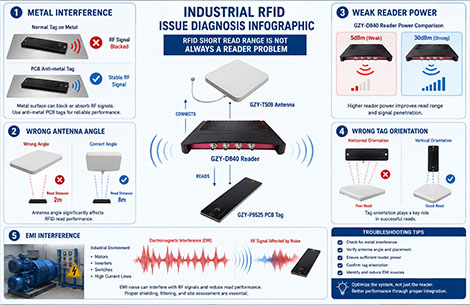
Customers often report problems such as:
- Tags only readable at close range
- Unstable RFID detection
- Random missed reads
- Different read ranges for identical tags
- Good performance in testing but poor onsite performance
In many projects, the RFID reader itself is not actually the main problem.
Instead, issues usually come from:
- Antenna deployment
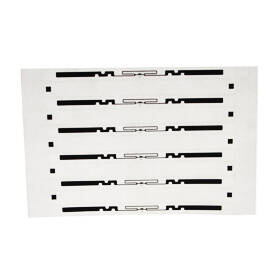
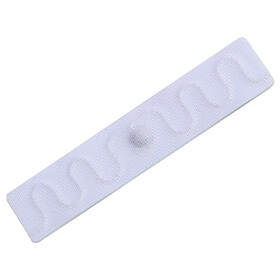
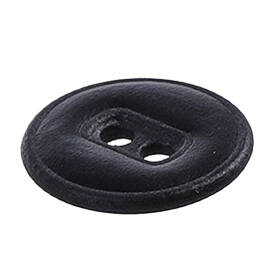
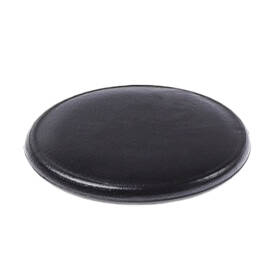
- Tag selection
- Environmental interference
- Incorrect installation
- Reader configuration
Why RFID Read Distance Is Different in Real Projects
One of the biggest misconceptions about RFID is assuming that laboratory test results represent real deployment performance.
In practice, industrial environments introduce major RF interference factors.
For example:
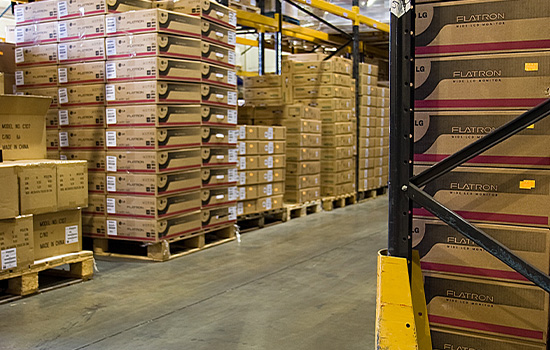
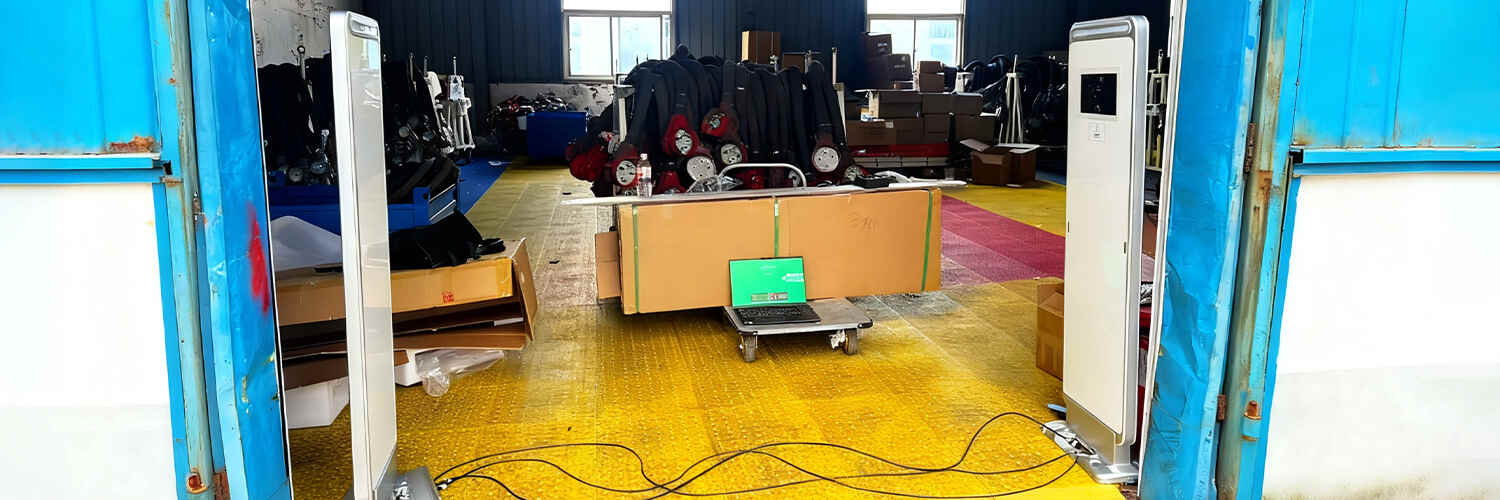
Warehouse Environment
Metal racks and pallet density create signal reflections that reduce RFID stability.
Factory Environment
Machines, motors, and electrical equipment generate EMI noise that affects RF communication.
Logistics Applications
Fast-moving objects and changing tag orientations reduce consistent reading performance.
In many warehouse deployments, customers initially expect 10-meter read range but only achieve 4–6 meters after installation.
This is completely normal in dense industrial environments.
Antenna Placement Issues That Reduce RFID Range
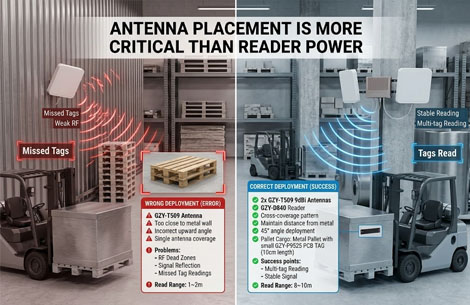
Antenna deployment is one of the biggest reasons for weak RFID performance.
Even high-performance readers cannot compensate for poor antenna positioning.
Common Deployment Mistakes
Antenna Installed Too Close to Metal
Metal surfaces reflect RF signals and create dead zones.
Wrong Antenna Angle
Incorrect angles reduce tag exposure to RF energy.
Insufficient Coverage Area
A single antenna often cannot fully cover warehouse aisles or loading zones.
Why Circular Polarization Matters
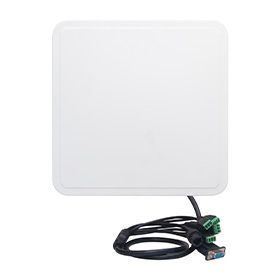
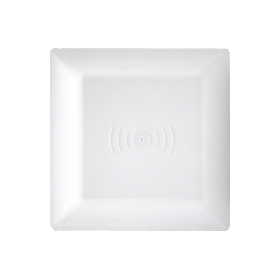
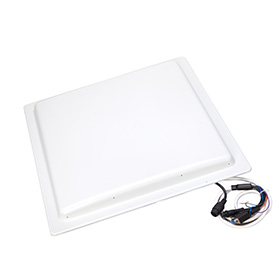
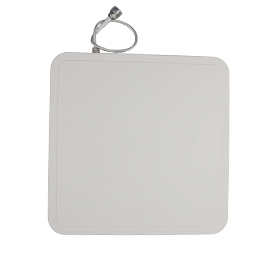
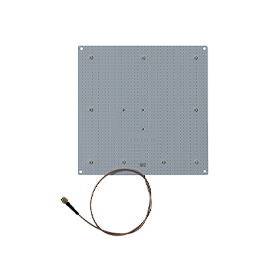
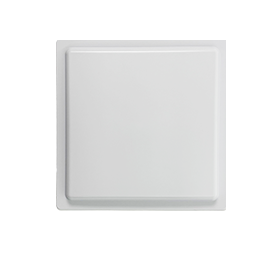
The GZY-T509 9dBi RFID antenna uses circular polarization to reduce signal loss caused by tag orientation changes.
Circular polarization helps reduce signal loss caused by tag orientation changes.
This is especially important in logistics and warehouse environments where tag directions constantly change.
How Metal and Liquid Affect RFID Signals
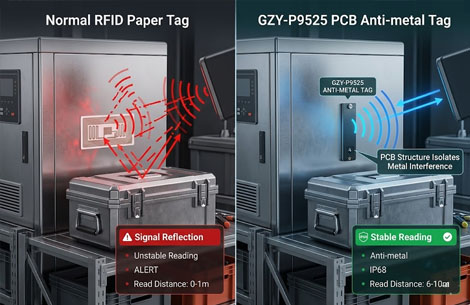
Metal and liquid are the two biggest enemies of passive UHF RFID.
Metal Interference
Standard RFID labels placed directly on metal often experience:
- Severe signal reflection
- Read distance loss
- Complete signal cancellation
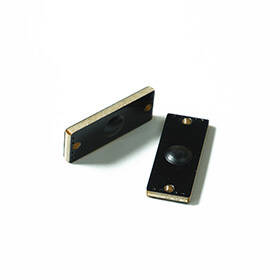
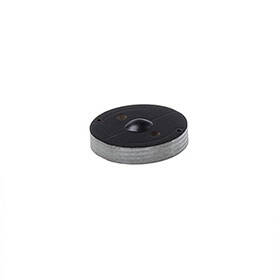
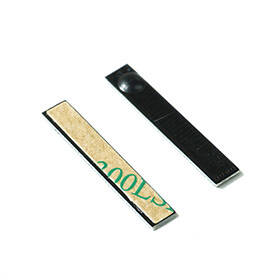
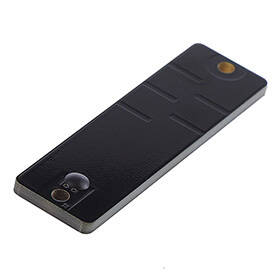
This is why industrial applications commonly use anti-metal RFID tags for metal asset tracking.
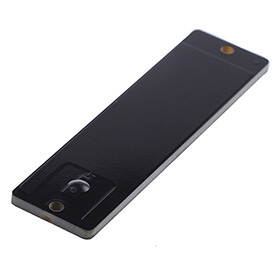
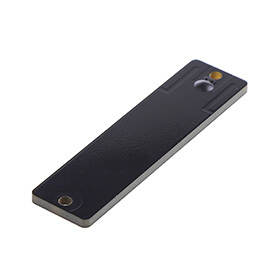
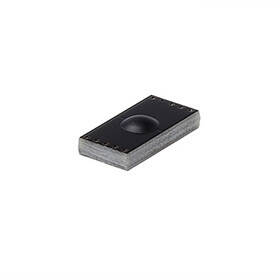
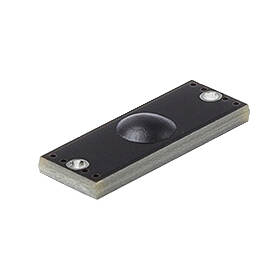
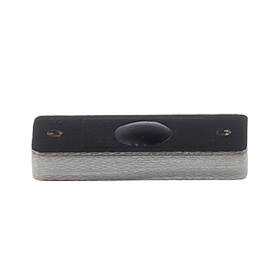
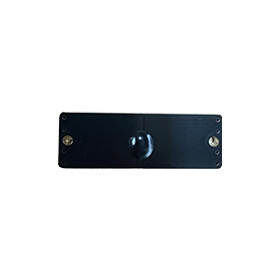
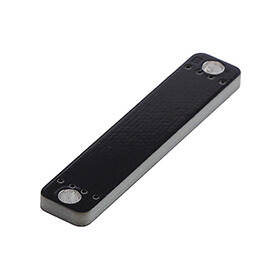
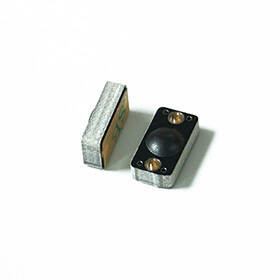
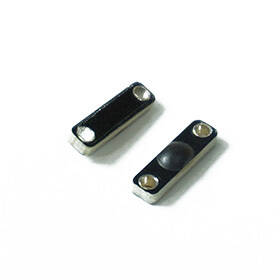
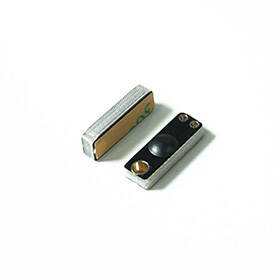
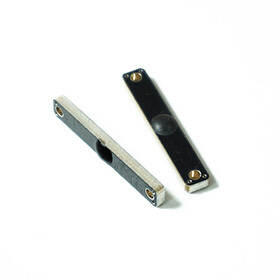
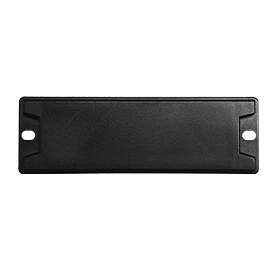
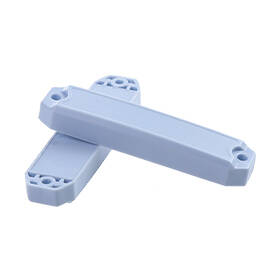
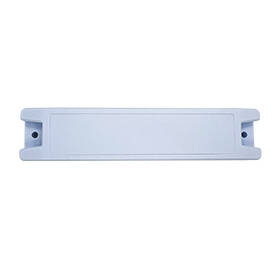
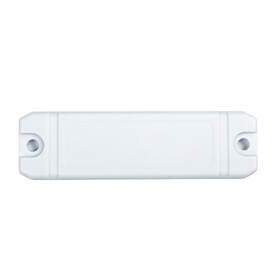
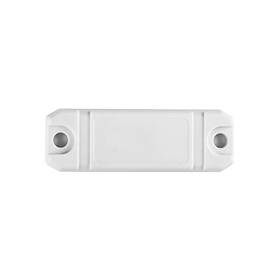
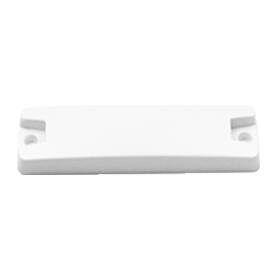
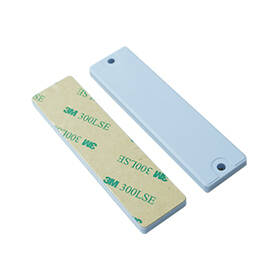
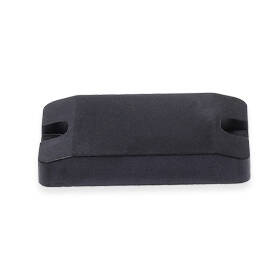
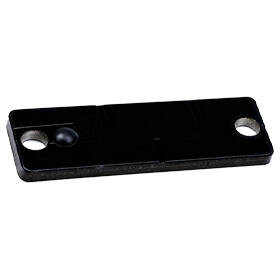
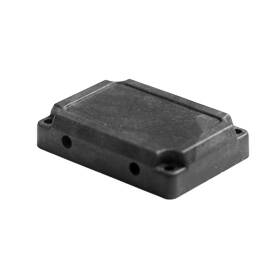
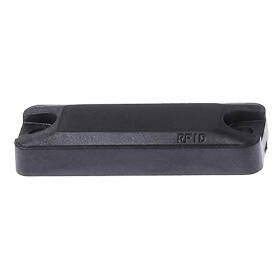
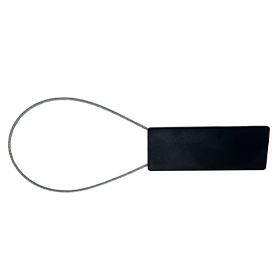
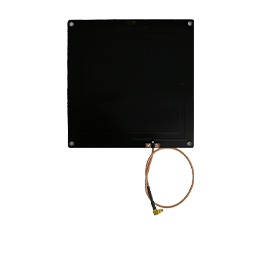
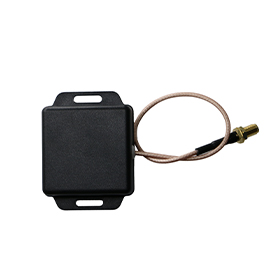
For example, the GZY-P9522 PCB anti-metal tag is specifically designed for:
- Metal asset tracking
- Industrial equipment
- Warehouse asset management
Its FR4 PCB structure helps isolate the tag antenna from metal surfaces.
Liquid Interference
Water absorbs UHF signals very efficiently.
Applications involving:
- Beverage containers
- Medical liquids
- Chemical drums
often require specialized antenna deployment strategies.
Incorrect RFID Tag Orientation Problems
RFID tags are directional.
Many customers unknowingly install tags in orientations that significantly reduce performance.
Common Orientation Issues
- Tags mounted sideways
- Tags hidden behind metal
- Tags blocked by dense products
- Tags stacked too closely together
In high-density warehouse projects, incorrect tag orientation can reduce reading distance by more than 50%.
RFID Reader Configuration Mistakes
Reader settings also affect RFID performance.
Common Configuration Problems
Output Power Too Low
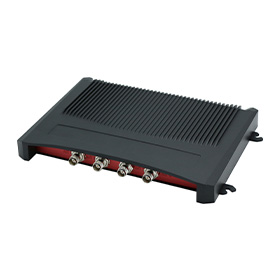
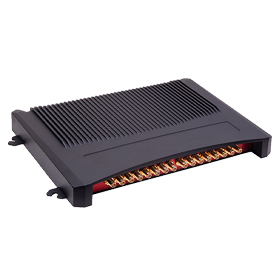
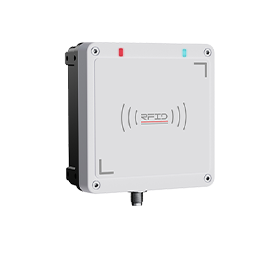
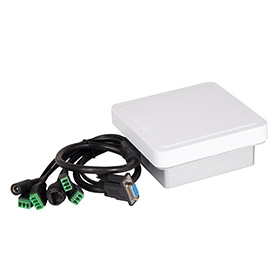
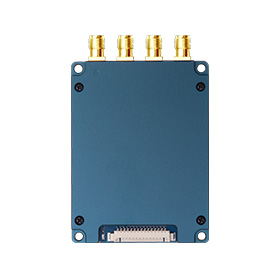
Industrial readers such as the industrial fixed RFID reader GZY-D840 support adjustable output power up to 30dBm.
Many deployments accidentally leave readers running at lower power settings.
Wrong Working Mode
Improper trigger mode or inventory cycle settings can reduce read efficiency.
Poor RSSI Filtering
Incorrect RSSI thresholds may ignore valid tag responses.
Why Industrial-grade Readers Matter
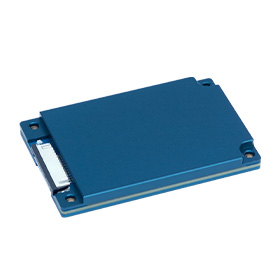
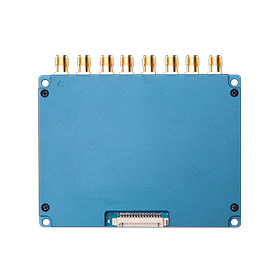
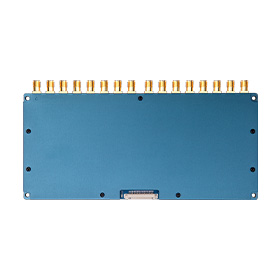
The GZY-D840 fixed RFID reader uses:
- IMPINJ E710 / R2000 chips
- High receiver sensitivity
- Multi-tag processing
- Up to 700 tags/second inventory speed
This helps maintain stable performance in dense RFID environments.
Why Low-quality RFID Hardware Causes Weak Signals
Low-cost RFID hardware often creates unstable performance.
Common problems include:
- Low antenna gain
- Poor RF shielding
- Weak receiver sensitivity
- Inconsistent output power
- Poor cable quality
Industrial RFID systems require stable RF performance, especially in environments with:
- Metal structures
- Electrical interference
- Multiple simultaneous tags
How to Improve RFID Read Range and Stability
Several optimization methods can significantly improve RFID performance.
Use High-gain RFID Antennas
9dBi antennas generally provide better range than low-gain antennas.
The GZY-T509 antenna is commonly used in:
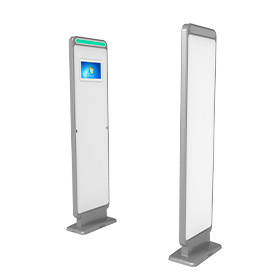
- Warehouse portals
- Asset tracking
- Logistics systems
because its circular polarization improves reading consistency.
Use Anti-metal RFID Tags
For metal assets, always use dedicated anti-metal tags.
PCB tags typically provide much more stable performance than standard paper labels.
Optimize Antenna Positioning
Proper height, angle, and spacing are critical.
In many warehouse projects, adding a second antenna improves performance more than increasing reader power.
Use Industrial-grade RFID Readers
Readers based on IMPINJ E710 or R2000 platforms generally offer better sensitivity and stability.
Recommended RFID Hardware for Long-range Industrial Reading
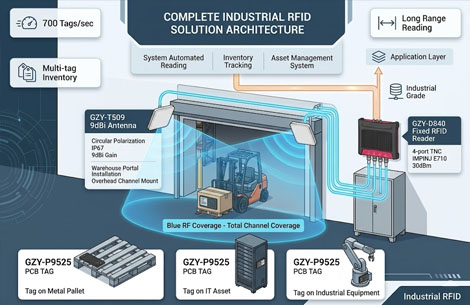
A common industrial long-range RFID setup includes:
RFID Reader
GZY-D840 Fixed RFID Reader
Suitable for:
- Warehouse management
- Logistics automation
- Industrial asset tracking
Features:
- 30dBm adjustable output
- Multi-port antenna support
- SDK/API integration
- High multi-tag reading performance
RFID Antenna
GZY-T509 9dBi Circular Polarized Antenna
Suitable for:
- Long-range RFID
- Outdoor deployments
- Dense warehouse environments
Features:
- IP67 protection
- EMI optimized design
- Circular polarization
RFID Tag
GZY-P9522 PCB Anti-metal RFID Tag
Suitable for:
- Metal assets
- Industrial equipment
- Fixed asset management
Features:
- IP68 protection
- Long read distance
- Industrial durability
Passive RFID Read Range vs Real-world Performance
Theoretical RFID range and real-world RFID range are often very different.
In industrial deployments, stable reading performance matters more than maximum advertised distance.
A properly designed RFID system focuses on:
- Stable reading
- Reduced missed reads
- Environmental compatibility
- Consistent tag detection
rather than simply chasing the longest possible read range.
Infowise RFID mainly provides industrial RFID hardware devices and hardware-layer RFID data collection solutions, which can integrate with third-party WMS, ERP, MES, and software platforms through APIs and SDKs.
FAQ
Why is my RFID read range suddenly shorter?
Common causes include antenna movement, metal interference, environmental changes, or reader configuration problems.
Does metal reduce RFID performance?
Yes. Standard RFID tags often perform poorly on metal surfaces unless anti-metal tags are used.
How can I improve RFID read range?
Using high-gain antennas, industrial readers, and anti-metal tags can significantly improve performance.
Why does RFID work in testing but fail onsite?
Real industrial environments contain RF interference, metal reflections, and complex tag orientations.
Is antenna gain important for RFID?
Yes. Higher-gain antennas help increase signal concentration and improve reading distance.
What is the best antenna for long-range RFID?
9dBi circular polarized antennas are commonly used for industrial long-range RFID systems.
 Prev
Prev